

Skip to content

A personal recordAlways in progress

Upkar Singh

A living record of what I’ve built and what I’m building next.

01About

The person behind the record.

Portrait of Upkar Singh at dusk

Most of what I build measures uncertainty: how bad a portfolio’s worst days could get, how sure a model can be of a hand sign, how much accuracy a cheaper circuit costs.

I’m a research analyst at VIDO and a computer engineering graduate from USask, working across machine learning, quantitative modelling and scientific computing.

Education

Bachelor of Science in Computer Engineering

University of Saskatchewan · Saskatoon, SK

Sep 2021 – Apr 2026 · Completed

Toolkit

Languages
  • Python
  • SQL
  • Java
  • C++
  • C
  • JavaScript
  • Verilog HDL
  • MATLAB
Machine learning & AI
  • TensorFlow
  • PyTorch
  • scikit-learn
  • Feature engineering
  • Model validation
  • Benchmarking
LLMs & retrieval
  • RAG
  • ChromaDB
  • Sentence Transformers (BGE)
  • BM25
  • Hybrid retrieval
  • Groq API
Data & analysis
  • Pandas
  • NumPy
  • SciPy
  • Matplotlib
  • Seaborn
  • Time-series analysis
  • Sensitivity analysis
Quantitative finance
  • VaR
  • Expected Shortfall
  • Monte Carlo simulation
  • Backtesting
  • HAC inference
  • Multiple testing
Quantum computing
  • PyQuil
  • Qiskit
  • Grover’s search
  • VQE
  • QAOA
Engineering
  • Git
  • Docker
  • Linux
  • pytest
  • CI
  • Data validation
  • Streamlit
02Experience

Where I’ve spent my time.

Roles, teams and commitments, newest first. Open any entry for the detail.

  1. Dec 2025 – PresentResearch Analyst (Quantum Computing)Vaccine and Infectious Disease Organization · Saskatoon, SK
    • Model dynamic biological systems from continuous time-course data, forecasting next-state behaviour from observed transitions in an interdisciplinary pharma/biotech research setting.
    • Built a configuration-driven Python pipeline to extract meaningful events from protein-activity time series and convert continuous trajectories into validated binary states for deterministic Boolean modelling, with reproducible outputs backed by 226 automated tests.
    • Implemented six continuous-to-binary encoding methods and validated BASC-A against an independent R implementation and exhaustive search, catching a fallback that had been mislabelled as a fitted threshold.
    • Quantified how representation changed the recovered dynamics: method choice alone moved results from 1 to 10 states and 0 to 34 switching events, and condition-specific fitting recovered 71% more switching events under cellular stress but reduced cross-condition comparability.
    • Assessed model robustness through contradictory transitions and threshold sensitivity, then formulated observed transitions as Boolean SAT constraints to identify feasible regulatory rules.
    • Mapped SAT rule-search problems to 9-qubit quantum circuits across IBM and Rigetti platforms, running Grover’s search on a Rigetti Novera processor, benchmarking noiseless simulation against hardware and extending the formulation to VQE and QAOA.

    Skills: Python · Time-series analysis · Boolean modelling · Threshold sensitivity · SAT · Grover’s search · VQE · QAOA · IBM Quantum · Rigetti Novera

  2. Jun 2025 – Sep 2025Summer StudentSaskatchewan Human Rights Commission · Ministry of Justice · Saskatoon, SK
    • Maintained data integrity across 120+ active case files in a records management system (ProLaw), auditing records for accuracy and consistency and resolving inconsistent or incomplete entries.
    • Served as front-line escalation point for 100+ public inquiries, applying procedural rules to cases that did not fit standard paths; tracked participation across five outreach initiatives and prepared stakeholder reports in Excel.

    Skills: ProLaw · Excel

  3. May 2024 – Apr 2025Vice-President, Student AffairsUniversity of Saskatchewan Students’ Union · Saskatoon, SK
    • Elected to a full-time executive term at a $29M organization representing 20,000+ undergraduates; served as primary liaison to the Provost’s office, Deputy Provost, and university administration, and represented the union in meetings with provincial ministers.
    • Chaired the Sustainability Fund Committee, evaluating 10+ funding proposals against a six-figure budget and issuing recommendations jointly with the Department of Sustainability.

    Skills: Governance · Advocacy · Committee leadership · Budget review

  4. Sep 2023 – Apr 2025Residence AssistantUSask Residences · Saskatoon, SK
    • Served as a first point of contact for around 500 residents, helping students settle into university life, responding to concerns and on-call situations, and connecting them with campus support services.
    • Kept accurate documentation of incidents and residence events, and created analysis reports from the event log.

    Skills: Community support · Crisis response · Documentation · Reporting

03Projects

Things I’ve made.

Research, engineering and coursework projects, newest first.

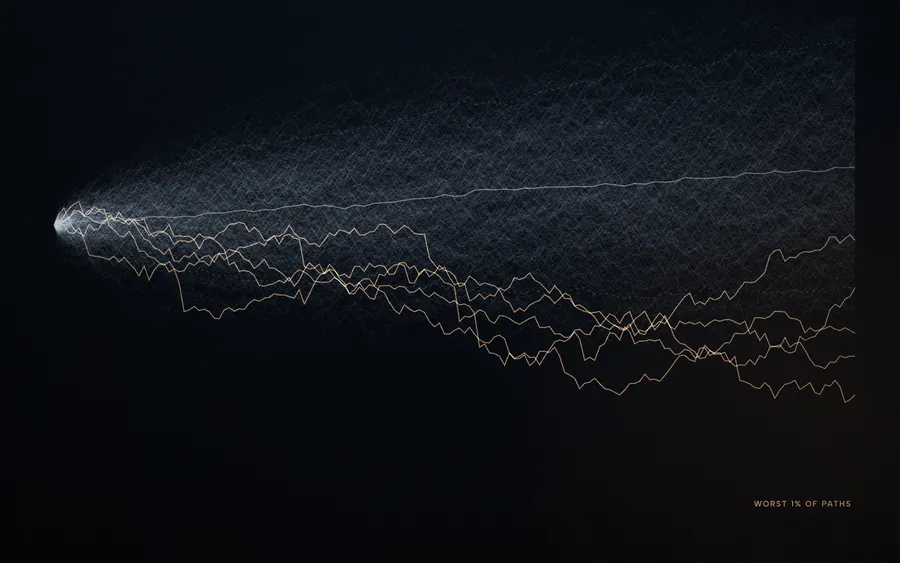
Illustration: a fan of simulated portfolio paths, with the worst 1% highlighted.

Sep 2026 – PresentQuantitative financeIn progress

Portfolio Tail-Risk EngineOne-Day VaR and Expected Shortfall, Tested Out of Sample

Do adaptive tail-risk models actually forecast better, or does added complexity just look better? I built a reproducible engine to test that on 14 years of out-of-sample data.

Built a one-day VaR and Expected Shortfall forecasting engine for an equal-weight, monthly rebalanced 11-asset equity portfolio, producing 3,519 out-of-sample daily forecasts (2012–2025) at 95%, 97.5% and 99% confidence under strict no-look-ahead validation.

Ran formal inference with full-sample Diebold–Mariano tests, Newey–West HAC errors and Holm adjustment. Adaptive models significantly beat the Gaussian benchmark in 6 of 12 comparisons, but EWMA and FHS were never statistically distinguishable, so FHS’s descriptive edge is not established.

Read more
  • Compared three models on identical inputs: a 504-day Rolling Gaussian benchmark, an EWMA Gaussian model (λ = 0.94), and Filtered Historical Simulation, which resamples complete standardized residual vectors to preserve cross-asset dependence without assuming normal shocks. Each model runs 100,000 Monte Carlo scenarios per forecast date.
  • Tested calibration beyond counting exceptions with Kupiec and Christoffersen backtests, exact Clopper–Pearson intervals by year, and Expected Shortfall tail-severity diagnostics, showing that calibration shifted materially over time.
  • Scored accuracy with strictly consistent scoring rules (quantile loss for VaR, FZ0 loss for VaR and ES jointly). EWMA ranked first in 10 of 14 years on VaR accuracy at 95% and 97.5%, while FHS led more often once Expected Shortfall was scored.
  • Stress-tested on the Feb–Apr 2020 selloff, where every model under-forecast 99% tail risk, with exception rates of 19.4% (Rolling Gaussian), 8.1% (EWMA) and 6.5% (FHS) against a 1% target.
  • Engineered for reproducibility with separated data, forecasting and evaluation layers, non-overwriting result snapshots with SHA-256 checksums, figures regenerated only from verified data, and 650 automated tests.
Tools and disciplines
Python, NumPy, pandas, SciPy, Matplotlib, pytest

Illustration: stacked filing pages with retrieved rows highlighted and traced to a cited answer.

Jul 2026 – Aug 2026Applied AICompleted

FinRAGQuantitative Research over SEC 10-K Filings

Built FinRAG, an evidence-first retrieval-augmented generation application for researching narrative disclosures and financial statements across five FY2022 SEC 10-K filings, with an interactive Streamlit interface that displays filing-page citations, structured table evidence, and formula-backed financial calculations.

Designed a hierarchical retrieval pipeline combining company routing, dense/BM25 fusion, multi-query decomposition, and row-aware table search. On a 29-question FinanceBench development set, improved gold-page Hit@5 from 37.9% to 62.1% (+24.2 percentage points) and reached 96.6% candidate recall.

Tools and disciplines
Retrieval-augmented generation, Python, ChromaDB, BM25, Sentence Transformers, Streamlit
Illustration: the 21 hand landmarks of a signing hand, with the motion leading to the pose.

Sep 2025 – Apr 2026Machine learning on the edgeCompleted

Portable ASL–English Translation Device

Built and deployed an end-to-end machine learning pipeline for a portable, offline ASL-to-English translation device running on a battery-powered Raspberry Pi.

Trained TensorFlow Lite gesture-recognition models from scratch on a large-scale ASL dataset, reaching 76% test accuracy through data preprocessing, augmentation, and feature extraction, and integrated the edge inference pipeline with the hardware and software teams for stable real-time performance.

Tools and disciplines
Python, Machine learning, TensorFlow Lite, scikit-learn, Linux, Git
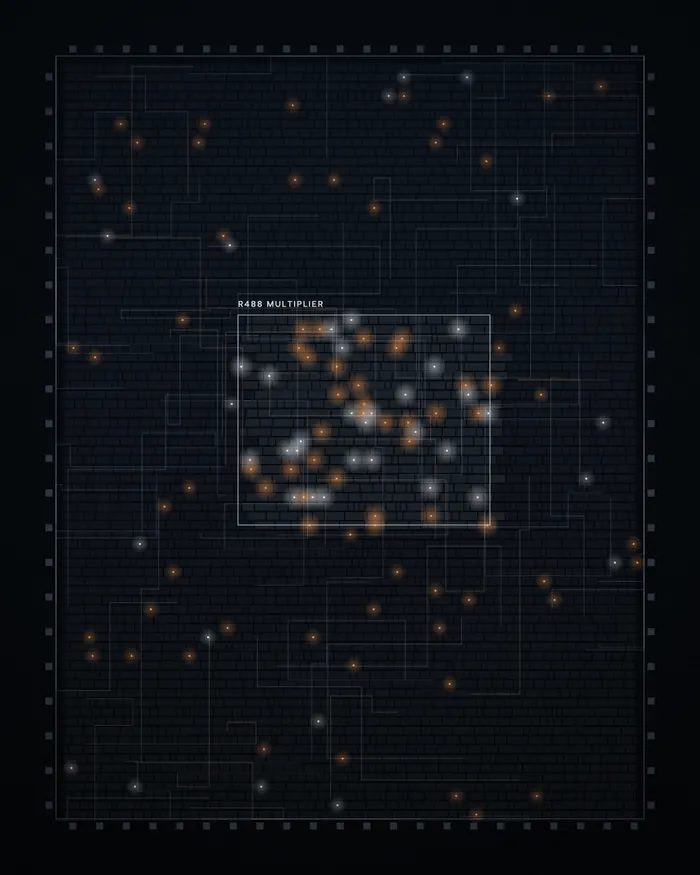
Illustration: a silicon die seen from above, its cells lit like a city at night around the multiplier core.

Oct 2024 – Dec 2024Computer architectureCompleted

Hybrid Multi-Radix Approximate Booth Multiplier

Designed hybrid Radix-4/Radix-8 approximate Booth multipliers achieving up to 20% area, 25% power, and 17% delay improvements over exact designs, while maintaining 96–97% DNN inference accuracy, balancing hardware efficiency against numerical precision for resource-constrained inference.

Tools and disciplines
Verilog, Computer architecture, Approximate computing

Read the paper ↗PDF · 2 pages (opens in a new tab)

More work

  • Sep 2024 – Nov 2024Employee Management SystemDesigned a Java backend with a normalized SQL database (5+ tables), implementing role-based access control, optimized CRUD operations, and data-integrity enforcement. Built a JavaFX front-end with self-service modules, validated end-to-end on a test dataset.Java · SQL · JavaFXSoftware engineeringCompleted
04Contact

Let’s talk.

A role you think I’d fit, a project we could build together, or just a hello: my inbox is open.